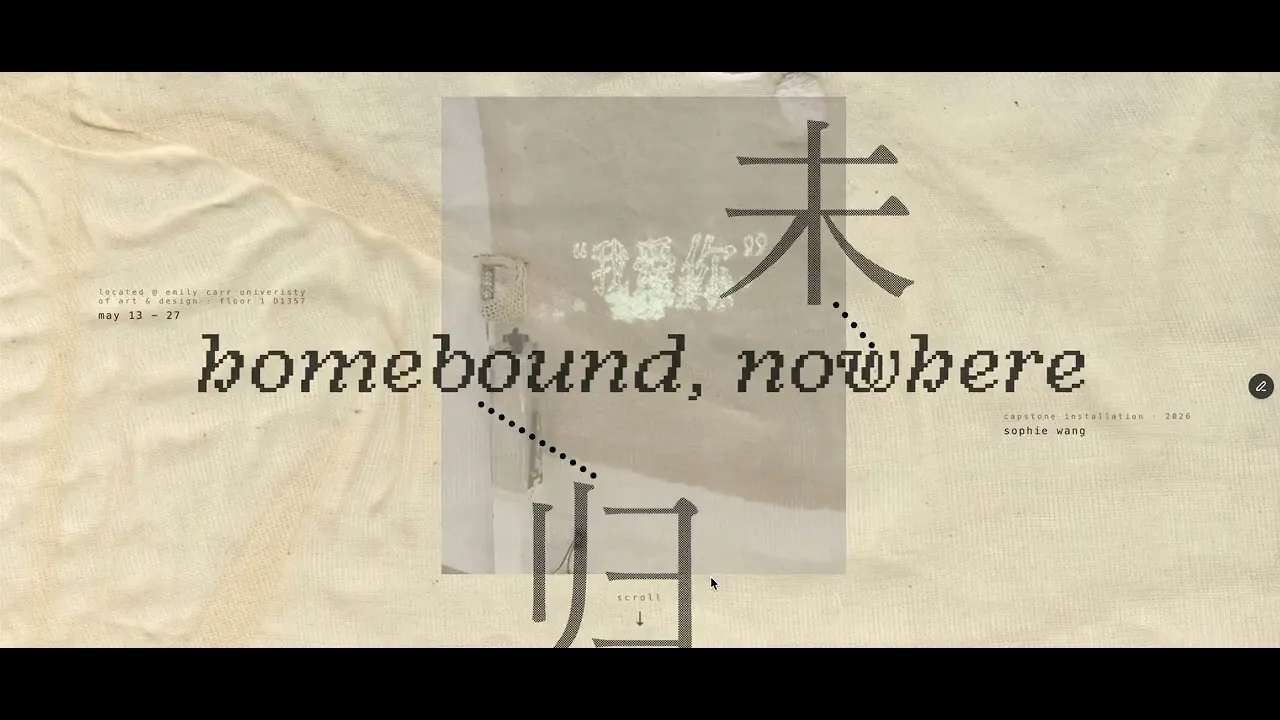


hombound, nowhere
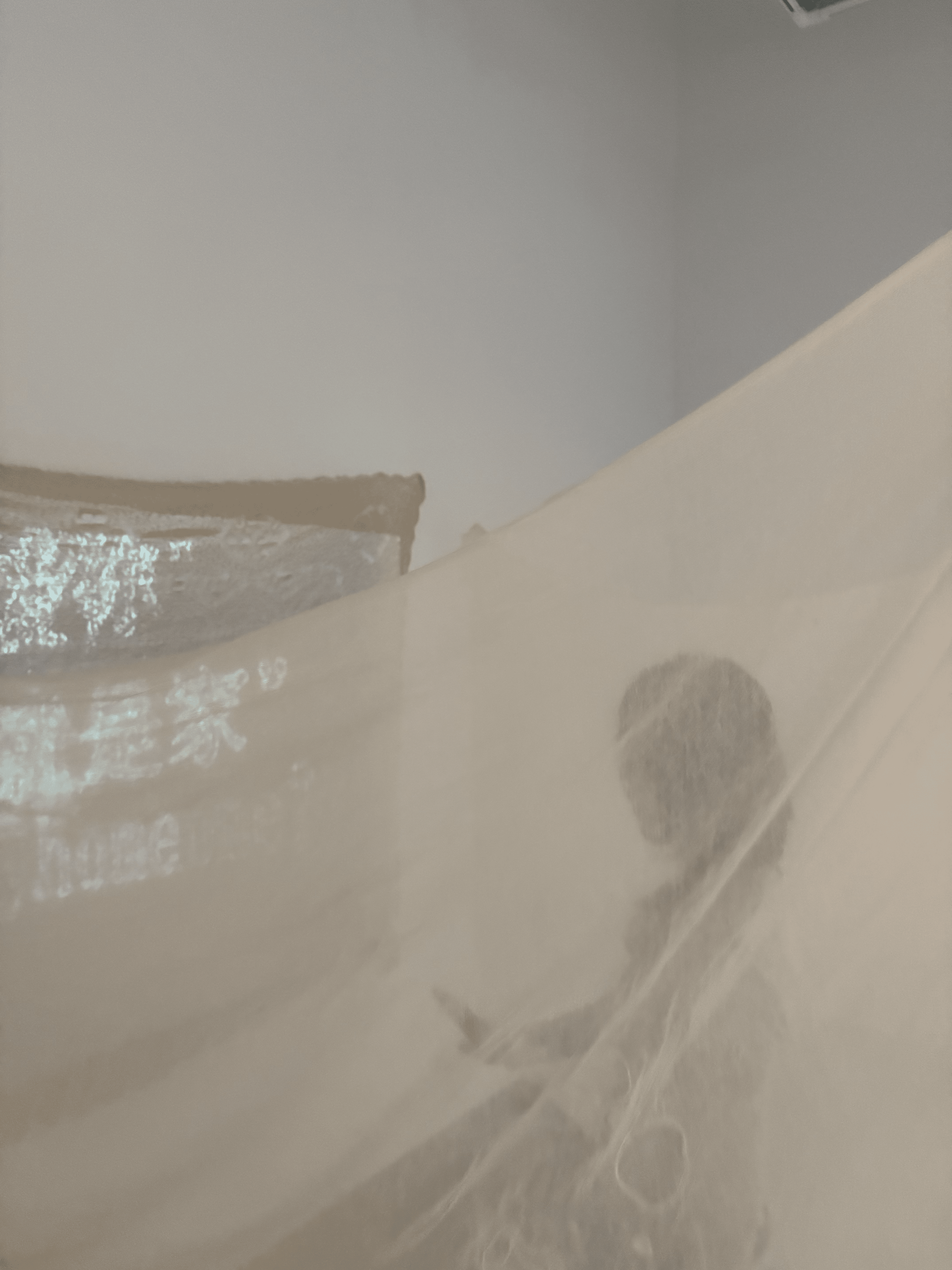
homebound, nowhere is an immersive interactive textile installation exploring the instability of belonging through language, material, and digital interaction. Combining handmade fibre work with projection, sound, and TouchDesigner, a suspended, roofless house constructed from gauze, embroidery, and crochet becomes both structure and metaphor: something you can enter, but not fully inhabit. Within it, physical and digital forms of home overlap.
what does it mean to belong?
This work draws on personal Chinese diasporic and second-generation immigrant experience, in which identity is shaped through fragments: inherited language, unspoken emotion, and cultural memory that resist clear translation. Rather than presenting a fixed narrative, homebound, nowhere invites its audience to move through a space of tension—between understanding and feeling, between presence and distance.
At the centre of this inquiry is a house without a roof. Four walls, windows, and a threshold suggest the shape of shelter, but its suspended structure remains open and exposed. It became an emotional structure for the things that are difficult to name: memory, family, expectation, and the contradictions of loving something that doesn't always feel like home.
material
TThe material language of the installation is rooted in repetition, touch, and care. Gauze, embroidery, and crochet carry time differently: each stitch accumulates slowly, holding the traces of attention that brought it into being.
Making became a practice of waiting and return. The embroidery followed programmed paths but demanded constant care; the crochet grew row by row, sometimes asking to be undone and rebuilt. Through these processes, I began to understand making not simply as a means of producing an object, but as a relationship built through time.
The symbols within the work emerged through this same process. Circular windows, a threshold, and plum blossoms hold meanings that language doesn't always reach. They became ways of carrying memory through material—threads pulled between people, places, and generations.

language to be experienced
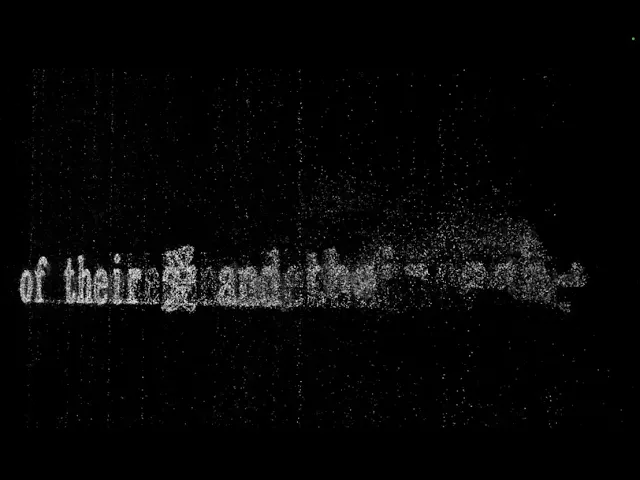
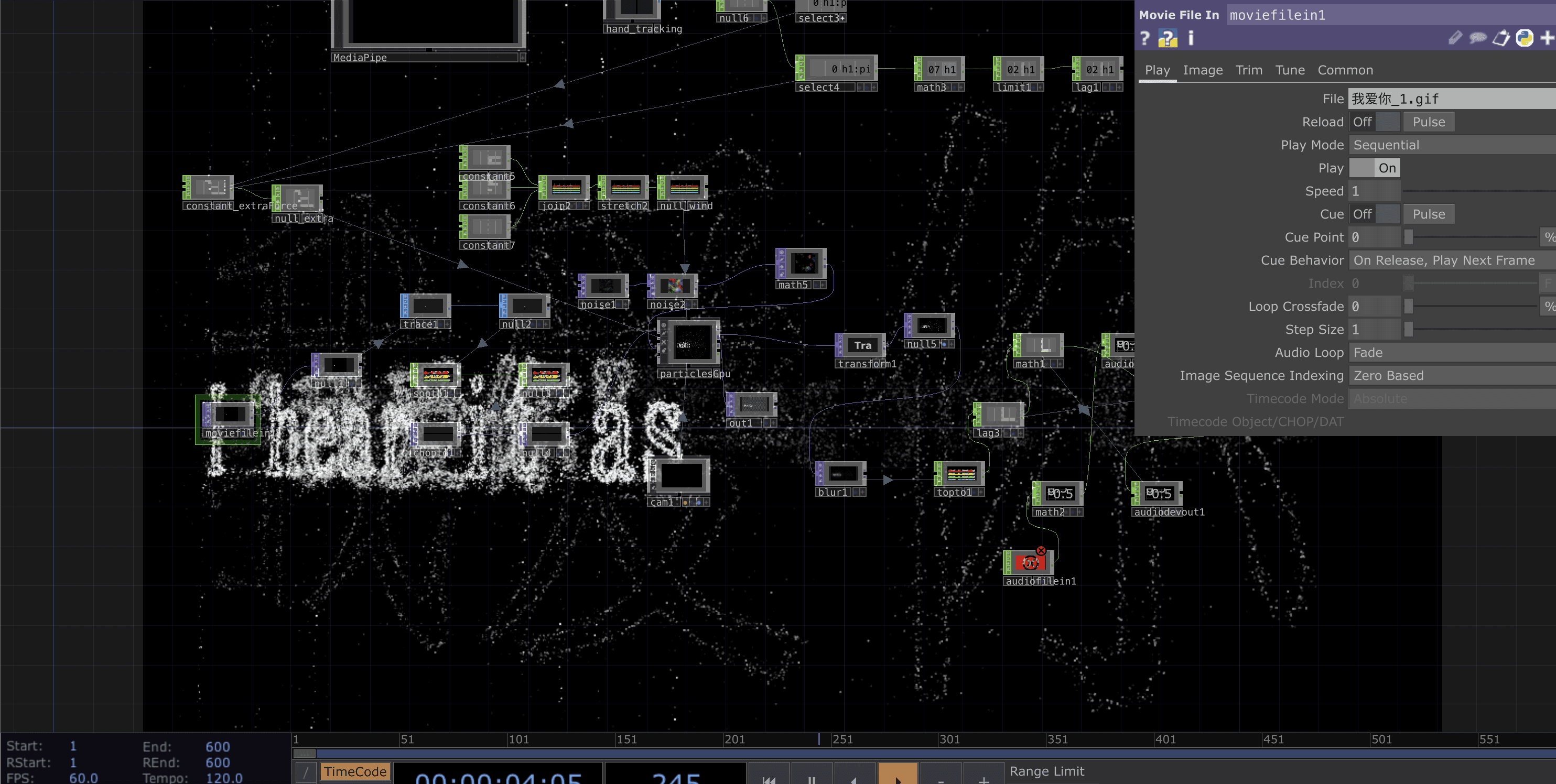
The digital layer of homebound, nowhere was built through a workflow of animation, real-time interaction, and spatial experimentation. I began by creating visual and typographic sequences in After Effects, then brought them into TouchDesigner, where they could be transformed into a responsive environment through particle systems and hand tracking.
The final installation became another starting point. During the exhibition, I 3D scanned the physical work and used it to reconstruct the house in Spline, creating a digital environment that could extend beyond the gallery. Each translation introduced a new way of encountering the same structure—moving between animation, interaction, physical space, and the web.
four walls, no roof
homebound, nowhere was built between systems that are often treated as opposites: handmade and computational, physical and digital, inherited and still becoming. Rather than resolving these differences, the installation lets them remain in conversation.
The house became a way of holding that tension. Its fabric walls catch projected light; handmade surfaces become responsive through technology; the body enters a physical structure and leaves traces within a digital one. The house was never intended to exist in only one place, continuing beyond the installation through an online narrative experience and accompanying publications—each offering a different way of entering the work.
Four walls, but no roof. A structure that can hold without fully containing. Like the idea of home itself, it is never entirely one thing or the other. In the end, I think that incompleteness is what allowed the work to stay open—to memory, to interaction, and to whatever comes next.